

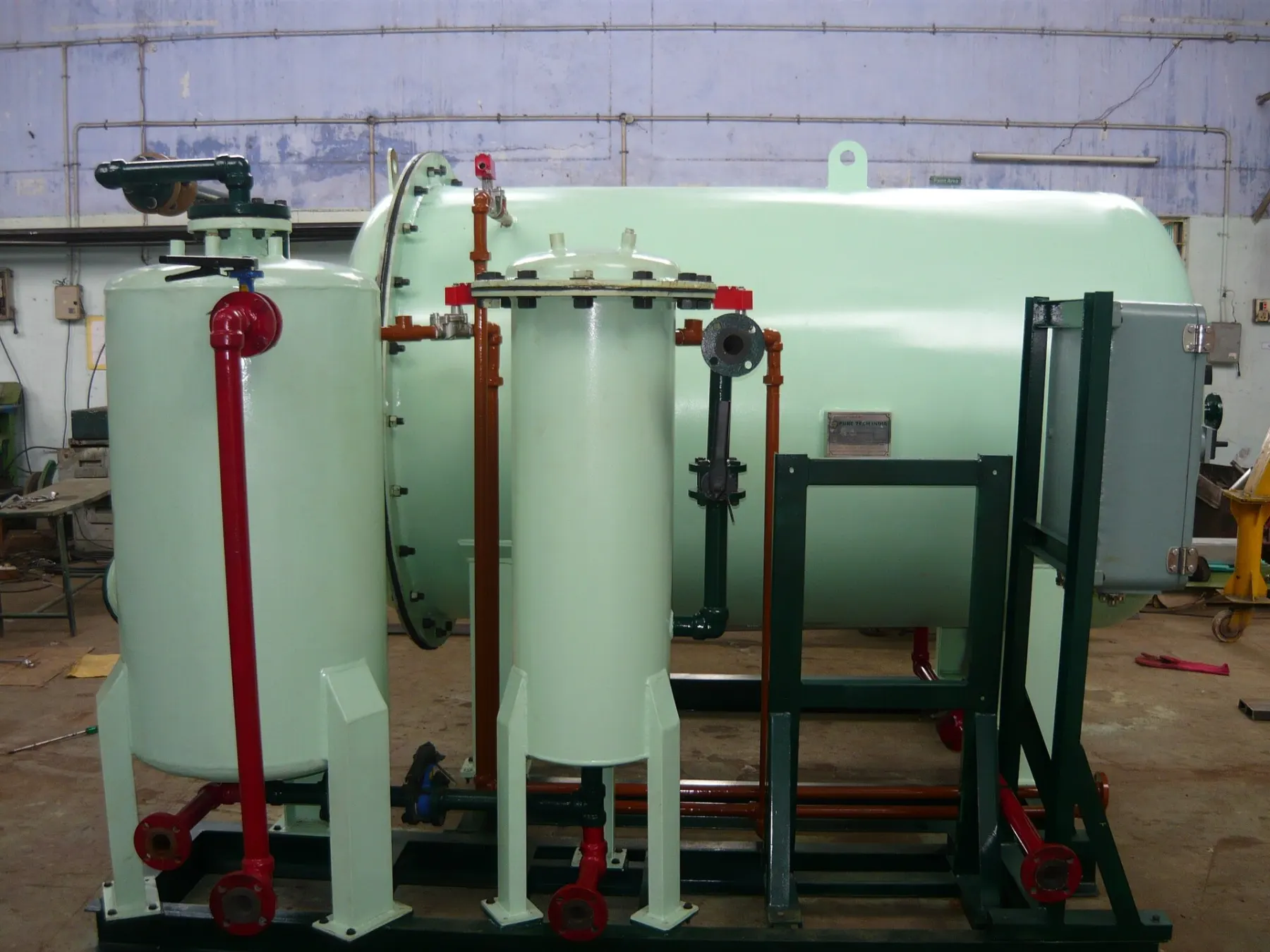
Oily waste separation is usually the first treatment step, and often the one that decides how expensive everything after it will be. Oilfield wastes such as tank bottoms, slop oil, contaminated drilling fluids and washdown water are rarely a single material. They are mixtures of solids, oil and water, and each fraction needs a different route. This article explains how physical separation and filtration work, what each stage achieves, how it reduces the volume that goes forward to further treatment, and what an operator should ask when reviewing a separation process.
Why oily waste separation comes first
Treating a mixed waste as a single stream is wasteful. Oil that could be recovered ends up in a solid residue that must be treated or disposed of. Water carrying a small amount of oil is handled as if it were all contaminated. Solids contaminated with hydrocarbons occupy space in later treatment cells. Separation breaks the mixture into fractions that can each be managed on their own terms, and it is consistent with the principle that recovery and reuse come before disposal.
The approach also makes the later steps more predictable. A clean water fraction can go to wastewater treatment, a recovered oil fraction can be reprocessed or returned where the owner and regulator allow, and a drier solid fraction can go to bioremediation or solidification and stabilisation. Each of these downstream processes performs better when it receives a more uniform feed.
Settling and gravity separation
Gravity does much of the work. In a settling tank or pit, oil rises, water stays in the middle and heavier solids sink. The process is simple, but it needs time, a suitable tank shape and control of turbulence, because mixing re-disperses what has settled. Residence time, temperature and the nature of the oil all influence how clean the layers become. Heavy or weathered oil separates slowly, and emulsions may hold oil and water together for a long time.
Operators often support gravity separation with skimmers to remove floating oil, with sludge draw-off points at the base, and with baffles that calm the flow. Where emulsions persist, treatment chemicals or heat are sometimes introduced, but their use should be justified by trials and compatible with downstream treatment.
Solids control and filtration
Where drilling fluids are involved, solids control equipment is the main physical tool. Screens, centrifuges and similar units remove cuttings and fine solids so that fluid can be reused or sent for treatment. White Nile Consults lists solids control among the support services behind its three main service lines, because efficient solids removal at the start reduces the load on everything that follows.
Filtration follows when finer separation is needed. Filters and presses retain fine solids while letting liquid pass, and the cake that results is drier and easier to handle than a wet sludge. Filter selection depends on particle size, oil content and how much blinding (clogging) the waste causes. A filter that blocks every few hours is not a practical solution, however good it looks on paper.
How oily waste separation reduces waste volume
Volume reduction is where separation pays for itself. Because disposal and transport costs usually follow volume, removing free water and recoverable oil early shrinks the quantity that needs further handling. The reduced volume also means fewer trucks on the road, less storage and a smaller footprint for treatment cells.
It is worth being careful about what is being reduced. Moving oil from one stream to another is not a reduction in contamination, and dewatering that simply produces a larger volume of dirty water has shifted the problem rather than solved it. Mass balance thinking helps: where did each fraction go, and has it reached an approved route?
What to check in a separation process
When reviewing a separation operation, a project manager or HSE lead can usefully ask the following:
- Has the incoming waste been characterised, including oil, water and solids proportions
- Are tanks and pits lined, bunded and protected from rainfall and overflow
- How is recovered oil stored, labelled and moved onwards
- Where does the separated water go, and is it tested before it moves to wastewater treatment
- How are solids dewatered, and what moisture and hydrocarbon content remain
- Are volumes of each fraction recorded for every batch
Fire risk and vapour exposure deserve attention wherever light hydrocarbons are present, so ventilation, ignition control and appropriate personal protective equipment should be part of the procedure.
Records and onward routes
Separation does not end the waste's life cycle; it sorts it. Each fraction should be tracked to its next treatment step, and the figures should reconcile with what arrived. The wider context is described in the life cycle of oilfield waste from rig to disposal, and the thinking behind recovery first is set out in the waste management hierarchy for oil and gas. Where the separated liquid is destined for biological or membrane treatment, the principles in oil and gas wastewater treatment apply.
Final thoughts
Responsible operators treat separation as a design decision made early, not a clean-up step added late. White Nile Consults applies treatment methods according to waste type and risk, with recovery and reuse prioritised and disposal last, and it provides waste water treatment and disposal alongside solids control and oilfield water services. If you are reviewing how your oily waste is split and routed, you are welcome to contact the team to talk it through.
Comments
No comments yet. Be the first to share your thoughts.