

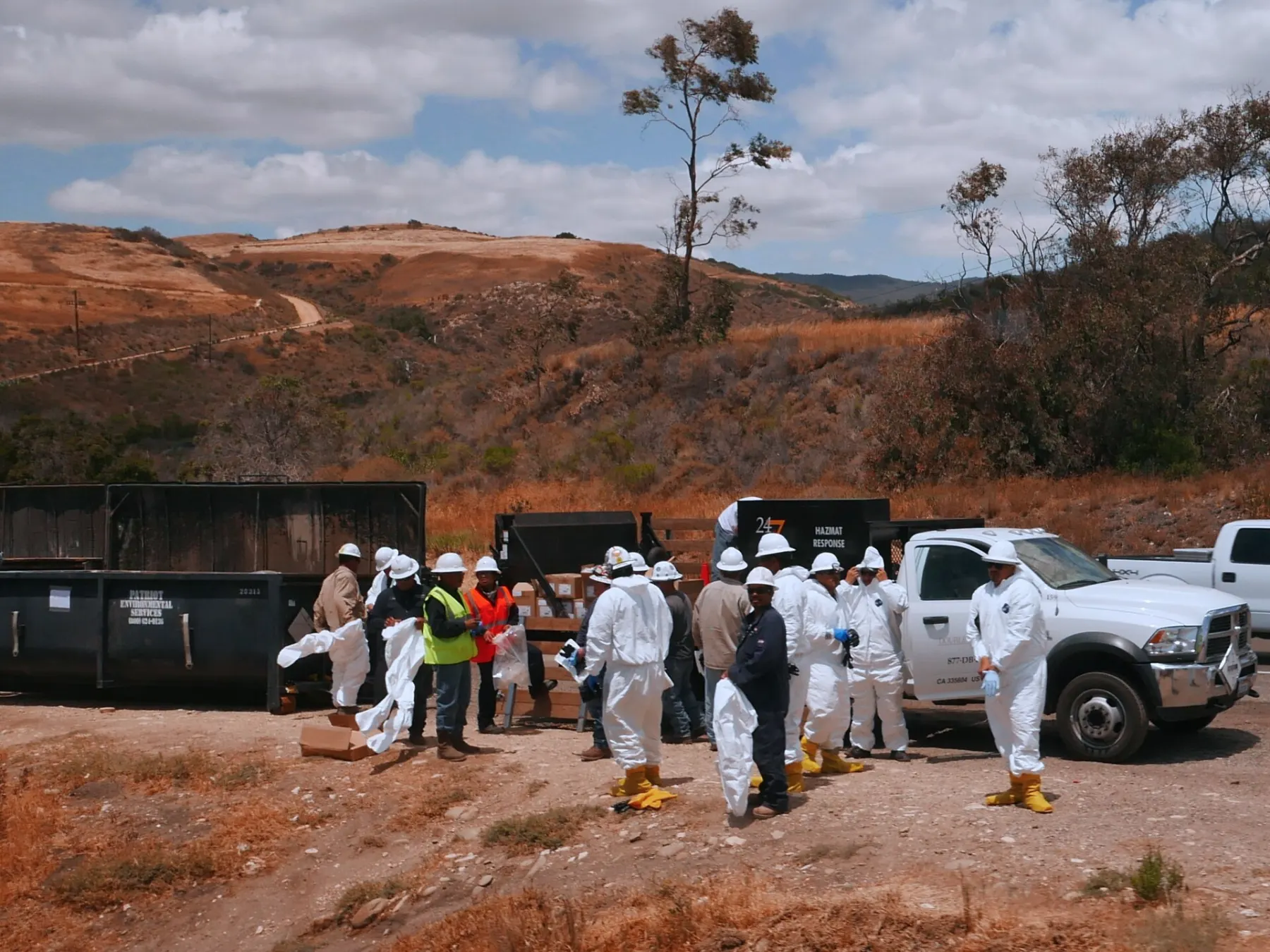
Oil spill cleanup remediation is a staged process that begins with stopping and containing the release and ends only when the site has been verified as safe for its intended use. For operators in Uganda, where spills can occur near wetlands, farmland and water sources, the work calls for sound assessment, appropriate recovery methods, treatment matched to the contaminated material and sampling that proves the result. This article walks through the stages from containment to restoration and explains what responsible clean-up looks like in practice.
Stage one: containment and free product recovery
Everything that follows depends on how quickly and effectively the spill is contained. The immediate steps, described in the guide to oil spill emergency response, are to make the area safe, stop the source and prevent spread, especially toward drains and watercourses.
Once the release is controlled, free product is recovered. On hard surfaces and in bunded areas this may involve pumps, vacuum equipment and absorbents. On soil, the aim is to remove pooled oil before it migrates downward. Speed matters because hydrocarbons that have soaked into soil are harder to remove than those sitting on the surface.
Recovered oil, used absorbents and contaminated water are waste from the moment they are collected. They need suitable containers, labels and secure temporary storage, and should be moved only under proper documentation.
Assessing contamination before oil spill cleanup remediation
Before choosing a clean-up method, you need to know how far the contamination reaches. A site assessment typically covers the visible footprint, the depth of impact, the soil type, the position of groundwater and the proximity of sensitive receptors such as streams and wells.
Sampling is central to this step. Soil samples taken across and beneath the affected area, analysed by a competent laboratory, show the concentration and distribution of hydrocarbons. This is characterisation applied to the ground rather than a waste container, and the same principles apply: representative samples, documented handling and reliable analysis. The reasoning is set out in waste characterisation and why it comes first.
Choosing a remediation approach for contaminated soil
No single method suits every spill. The choice depends on the type of hydrocarbon, concentration, soil properties, site access, time available and regulatory expectations. Common approaches include:
- Excavation and removal of heavily contaminated soil for off-site treatment.
- Treatment on site in a controlled area, sometimes called ex situ treatment.
- Treatment in place, without excavation, where conditions allow.
- Physical separation or washing for soils with high oil content.
- Solidification and stabilisation where contaminants need to be immobilised before placement.
Biological treatment is widely used for hydrocarbon-impacted soil because micro-organisms already present in soil can break down many hydrocarbons when conditions are right. The trade-offs between treating in place and moving soil to a managed area are explained in in situ vs ex situ bioremediation.
How bioremediation works on spill-affected soil
Bioremediation relies on managing the conditions that micro-organisms need: moisture, oxygen, nutrients, suitable temperature and a pH within a workable range. Contaminated soil may be spread in layers or windrows, turned to introduce air, kept at the right moisture level and amended with nutrients where tests show a deficiency.
Progress is monitored by sampling over time. Hydrocarbon levels should fall, and the rate depends on the oil type, the soil and the weather. Heavier fractions break down more slowly, and very high concentrations or toxic co-contaminants can inhibit the process, which is another reason initial characterisation matters. Operators should expect the process to take time and plan the schedule accordingly rather than promise a fixed duration before results are in.
Verification sampling and closure
Treatment is finished when the data say so, not when the schedule runs out. Verification sampling compares post-treatment results with agreed targets for the intended land use and the applicable regulatory requirements. These targets should be confirmed with NEMA and, where the activity falls under petroleum operations, the Petroleum Authority of Uganda, since requirements depend on the site and circumstances.
A sound closure package typically includes:
- The incident record and containment actions taken.
- The site assessment and the remediation plan.
- Treatment records and monitoring results.
- Verification sample results from a competent laboratory, with locations mapped.
- Waste tracking records for every material removed from site.
- Photographs before, during and after the work.
If results do not meet the targets, further treatment or a revised approach is needed before the site can be closed out.
Restoration and aftercare
Once the soil meets the criteria, the site is reinstated: backfilling, grading, drainage correction and, where relevant, revegetation using suitable local species. Follow-up observation after restoration confirms that vegetation is establishing and that no oil is reappearing at the surface. Where groundwater was at risk, continued monitoring may be appropriate, as discussed in monitoring groundwater near treatment sites.
Final thoughts
Responsible operators treat a spill as a project with a defined start, method and end point, supported by evidence at each stage. They keep records, use qualified people and do not close a site on appearance alone.
White Nile Consults Limited applies bioremediation, solidification and stabilisation, and licensed treatment and disposal methods according to waste type and risk at its Kikuube facility. Our solid waste treatment and disposal service page outlines our approach to solid waste. If you need to discuss a clean-up project, please contact the team.

Comments
No comments yet. Be the first to share your thoughts.