

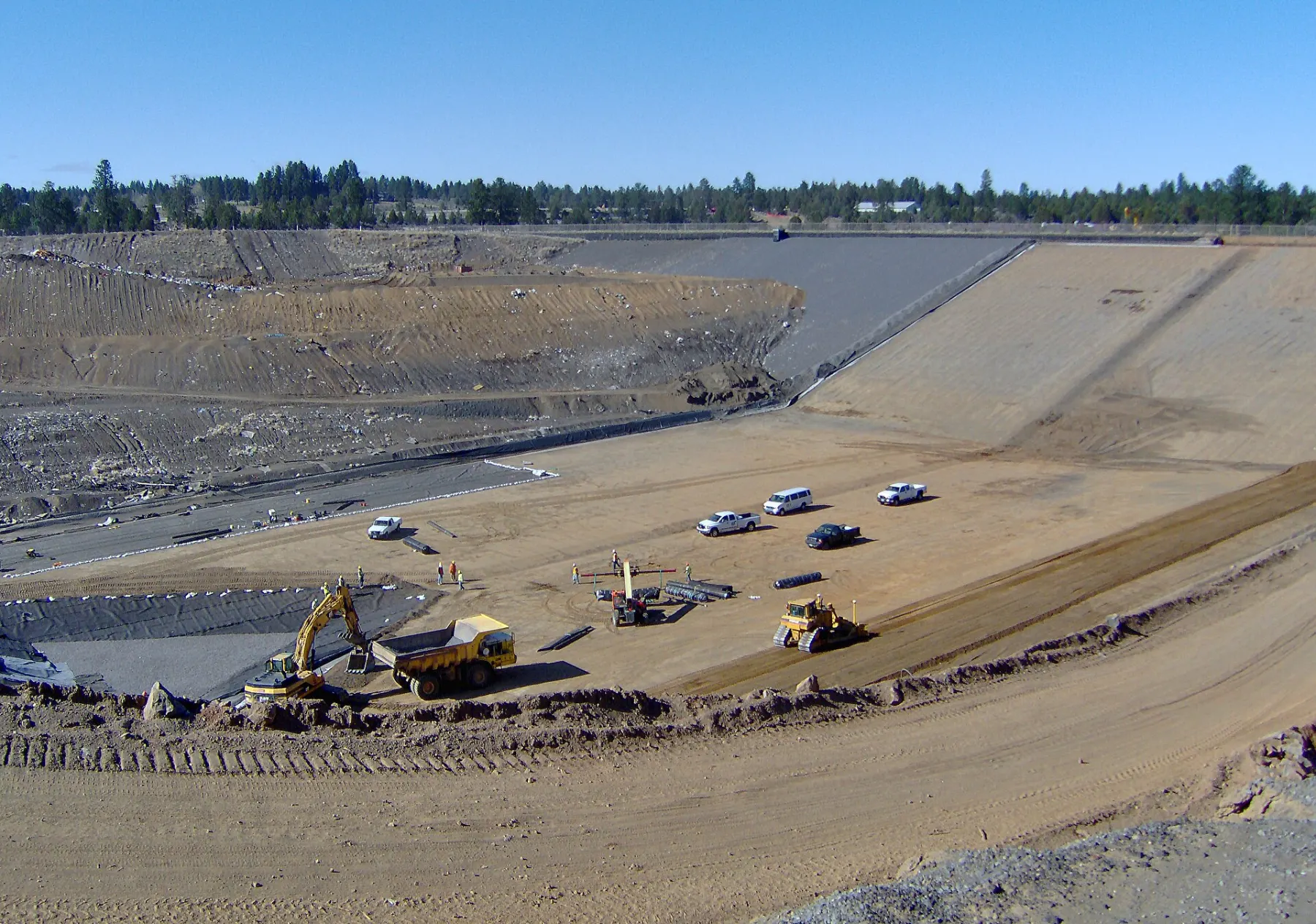
Engineered landfill hazardous waste disposal is often discussed as though it were a simple alternative to treatment, but the two are not substitutes. In well-run programmes, treatment usually comes first and the landfill, where one is used at all, receives only what remains and only when it meets defined acceptance criteria. This article explains when treatment must precede disposal, what makes a landfill engineered, how leachate is controlled and what operators should ask before choosing a disposal route for oilfield waste.
Treatment first, disposal last
The waste management hierarchy places prevention, reuse and recovery above treatment and disposal, and disposal at the bottom. The reasoning is straightforward: every tonne that is reused or treated to a lower hazard is a tonne that does not become a long-term liability. The framework is described in the waste management hierarchy for oil and gas.
For hazardous oilfield waste, this has a practical meaning. Oily sludge, contaminated soil and some drilling wastes often need treatment to reduce hydrocarbon content, immobilise metals or reduce mobility before they can be placed in any disposal facility. Sending untreated hazardous material straight to landfill moves the risk rather than removing it, and many facilities and regulators will not accept it.
What makes an engineered landfill suitable for hazardous waste
An engineered landfill is designed, constructed and operated to contain waste and control releases to the environment. It is very different from an open dump or an unlined pit. Typical features include:
- Site selection that considers geology, groundwater depth, flooding and distance from communities and water sources.
- A low-permeability base and liner system to prevent migration of liquids into the ground.
- A leachate collection system above the liner.
- Controlled cell development, so that only a limited area is open at a time.
- Surface water management to keep clean runoff away from waste.
- Daily and final cover to limit infiltration, odour and wind-blown material.
- Monitoring points around the site, including groundwater monitoring.
The specific design standards, and the classes of waste a given landfill may accept, are set by regulation and the facility's permits. Operators should confirm current requirements with NEMA.
Acceptance criteria and why they exist
A landfill cannot take everything. Acceptance criteria define what a facility may receive, based on its design, permits and risk assessment. They often address waste type, hazard classification, free liquids, hydrocarbon content, leachability of contaminants, pH and physical consistency.
These criteria are why waste characterisation comes first. A waste that has been sampled, analysed and documented can be compared with the criteria, and treated if it falls short. Without data, nobody can say whether a load is acceptable. Pre-acceptance checks and verification on arrival protect the facility, the generator and the environment.
Leachate: the central risk to manage
When water passes through waste it can pick up contaminants and form leachate. Managing it is central to landfill design and operation. A liner and collection system capture it, and it is then stored and treated, rather than allowed to reach soil or groundwater.
Reducing the amount of leachate generated is just as important. Keeping rainwater out of open cells, shaping covers to shed water, and removing free liquids from waste before placement all help. Treated waste, particularly material that has been solidified and stabilised, tends to release fewer contaminants, which is one reason testing of treated material, described in how solidification and stabilisation is tested, is so closely tied to disposal decisions. Leachate treatment can draw on wastewater technologies, and the options are outlined under waste water treatment and disposal.
Comparing routes: questions to ask
The decision should be made stream by stream, with data in hand, rather than by habit or by whichever option was used on the last project. Cost matters, but so does the long-term position of the generator once the waste has left the site.
Choosing between treatment, recovery and disposal is rarely binary. A practical approach is to ask a consistent set of questions for each waste stream:
- Can the waste be reduced at source or reused?
- Does it contain recoverable oil, water or material of value?
- Can treatment reduce its hazard or volume to acceptable levels?
- Does the treated residue meet the acceptance criteria of a licensed disposal facility?
- What are the long-term obligations, monitoring and liability attached to the route?
- Is the facility licensed for this waste, and can it show its documents?
The answers often lead to a combination of methods: recover what can be recovered, treat what can be treated and dispose of the residue in a suitably engineered and licensed facility.
Long-term liability and documentation
Disposal does not end responsibility. Generators should retain records showing what was sent, where, when and under what approvals, because those records may be needed long after the waste has left the site. Waste tracking and documentation are the foundation of that defensibility.
Final thoughts
Responsible operators ask first whether disposal is necessary, then whether treatment can reduce the hazard, and only then which licensed route is appropriate for what is left.
White Nile Consults Limited prioritises recovery and reuse, with disposal as the last option, and holds a NEMA licence to own and operate a hazardous waste treatment and disposal site. You can review its credentials on the certifications page of this site, or contact the team to discuss a particular waste stream.
Comments
No comments yet. Be the first to share your thoughts.